Single-Estate vs Supermarket Olive Oil: Is the Price Difference Worth It?
October 10, 2026 - Olive Oil
Stand in the oil aisle of any UK supermarket and you meet a confusing cast of characters: extra virgin, virgin, light, mild, pure, extra light. Some of those words are legally defined. Others are marketing. The gap between them is the difference between a peppery green oil you would happily sip from a spoon and a pale, neutral liquid that exists mainly to stop things sticking to a pan.
Here is what the labels actually mean, and how to pick the right bottle for the job.
Extra virgin olive oil is the top grade. It is extracted from olives by mechanical means alone — pressing, spinning, centrifuging — with no heat treatment and no chemical refining. To earn the name it must meet a strict acidity threshold (no more than 0.8 g of free fatty acids per 100 g of oil) and pass a tasting panel with no defects at all. Good examples taste green and grassy, and often finish bitter or peppery at the back of the throat. That peppery catch is a sign of fresh polyphenols, not a fault.
Virgin olive oil is also unrefined and mechanically extracted, but the bar is lower: acidity up to 2.0 g per 100 g, and a panel may tolerate slight defects. It is far less common on UK shelves than extra virgin. Most of it ends up blended into other grades.
Olive oil — sometimes sold as "pure olive oil", a term with no legal standing — is a blend of refined olive oil and a smaller proportion of virgin or extra virgin. Refining strips out defects, acidity and most of the flavour. The virgin oil is added back for a bit of taste and colour. It is honest, useful, all-purpose oil, but it is not the same product as extra virgin.
Below that sits olive pomace oil, extracted from the leftover olive paste using heat and solvents, then refined. It is fine for deep frying and not much else.
Nothing to do with calories. All olive oils contain roughly the same amount of fat and energy per tablespoon — about 14 g of fat, most of it monounsaturated. "Light" refers only to flavour and colour.
Light olive oil is normally refined olive oil with a splash of virgin oil added, giving a pale, neutral, slightly buttery product with a high smoke point. "Extra light", "mild", "delicate" and "classic" are marketing descriptions, not grades. If you want a big, characterful oil for dipping, none of these will deliver it. If you want a cooking fat that will not shout over a delicate sauce, a light oil earns its place.
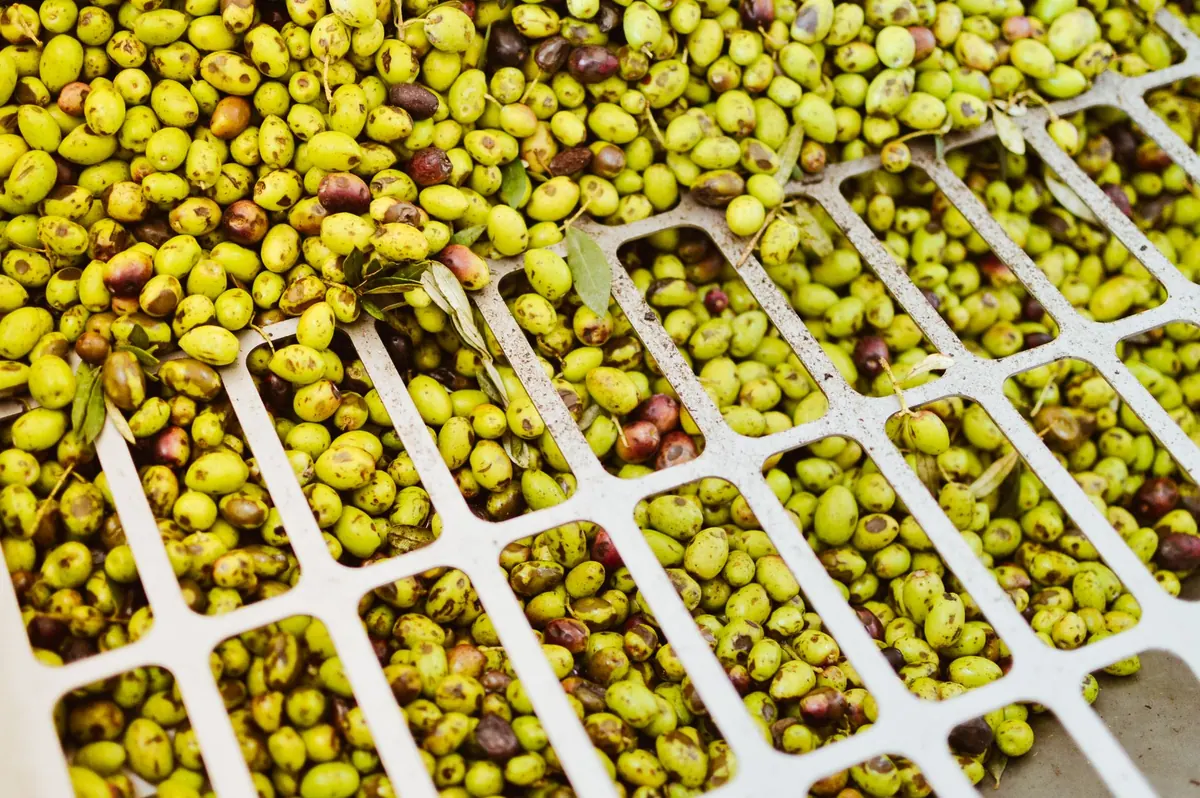
Olives go from tree to mill quickly. They are washed, crushed into a paste, and the oil is separated by centrifuge. Temperature matters: "cold extracted" means the paste stayed below roughly 27°C, which protects aroma and antioxidants. "First cold pressed" is largely a heritage phrase these days — modern mills do not really do a second press — but the sentiment behind it is sound.
Refining uses heat, filtration and sometimes chemical or physical treatment to neutralise defects in poorer-quality oil. The result is stable, neutral and cheap. It is then blended with a little virgin oil to become "olive oil" or "light olive oil".
Good extra virgin is more heat-stable than its reputation suggests. Its smoke point is high enough for roasting, shallow frying, and most home sautéing, and it holds up better than an old, tired oil that has been sitting in a warm cupboard for a year. Use a generous glug, keep the pan below the point where the oil starts to smoke and smell acrid, and do not reuse it more than once or twice. For deep frying, a cheaper olive oil or pomace oil makes more financial sense, since the flavour you paid for will be destroyed anyway.
Extra virgin works beautifully in olive oil cakes, focaccia, biscuits and anything with citrus, rosemary or dark chocolate. If you would rather the flavour did not come through — a plain sponge, say — reach for a light or standard olive oil instead.
This is where extra virgin earns its keep, and where spending a little more pays off. Use it raw: whisked into vinaigrette, spooned over tomatoes and mozzarella, drizzled on soup or grilled fish. For dipping, pour a little into a small bowl, add a pinch of flaky salt, and taste it on its own first. If you would not happily eat it off a spoon, do not dip bread in it.
A peppery green oil added off the heat — over beans, pasta, roast vegetables, hummus — does more for a dish than any amount of oil used during cooking. Keep one bottle for this and treat it as a seasoning rather than a cooking fat.
Ignore the front of the bottle for a moment and turn it around. Useful things to look for:
Buy in a size you will finish. Olive oil does not improve with age; it goes flat, then rancid. Keep it in a cool, dark cupboard away from the hob, the oven and the windowsill, tightly sealed. If you cook with oil most days, a one-litre tin is sensible. If you mainly dress salads, a 500 ml bottle is plenty and you will get through it while it is still fresh. There is no need to refrigerate it — cold turns it cloudy and semi-solid, which is harmless but irritating to pour.
A straightforward way to stock a kitchen:
If you are changing your diet for a specific health reason, it is worth speaking to your GP or a registered dietitian rather than relying on what the front of a bottle claims.
Photo: Chermiti Mohamed / Pexels
Single-estate olive oil costs far more than a supermarket bottle, but the difference shows mainly in freshness and...
A region-by-region tasting tour of Italian, Spanish and Greek olive oils, with flavour notes, traditional pairings...
Copyright © 2026 Olive Point. All Right Reserved.